AI Lyric Video vs Music Visualizer vs Full Music Video: Which Format Is Better for Artists in 2026?
Artists often frame visual content as an either-or decision: make a music video or save the budget. AI changes that equation because the middle formats—lyric videos, visualizers, animated artwork, singing photos, and social loops—can now be produced faster and reused across the campaign.
The better question is what each format needs to accomplish. A lyric video helps fans follow the song. A visualizer gives the audio a repeatable visual identity. A full music video creates a larger world around the artist or track.
Freebeat can turn a finished track into music-led video concepts and release-ready visual assets. Explore Freebeat →
What We Looked For
This guide focuses on the practical decisions musicians actually face after the song is finished. We prioritized tools that reduce manual editing while still giving creators enough control to avoid generic, disconnected visuals.
- Production time
- Creative control
- Fit for full-length tracks
- Storytelling capacity
- Performance visibility
- Ease of repurposing
- Best platform roles
At a Glance
| Format | Production effort | Best at | Weakest at |
|---|---|---|---|
| AI lyric video | Low–medium | Words, sing-along, search | Cinematic storytelling |
| Music visualizer | Low–medium | Full-track visual identity | Narrative depth |
| Full AI music video | Medium–high | Story, performance, brand world | Speed and simplicity |
How Freebeat Lets One Song Become All Three Formats
One reason this format choice is less restrictive in 2026 is that Freebeat exposes multiple music-specific creation paths inside the same ecosystem. The artist does not necessarily need to choose a lyric video instead of a visualizer or a full music video. The same song can become several assets whose jobs are different but whose visual identity remains connected.
For the flagship release, Freebeat’s full music-video workflow can analyze the track, create a directorial plan, generate a storyboard, and assemble a complete visual narrative. For a lyrics-led asset, the current music-video workspace includes a Lyrics Video path. For DJs, electronic producers, and tracks that need movement more than narrative, Freebeat also offers abstract, on-beat, realtime, DJ set, EDM, techno, and Spotify-oriented visualizer workflows.
That means the format decision can move from “which one do I make?” to “which order do I publish them?” A release can lead with the full music video, follow with the lyric version for listeners searching the words, then keep the track active with visualizer clips, Canvas loops, and vertical social edits.
- Full music video: best when the song needs story, characters, performance, or a memorable campaign world.
- Lyrics Video: best when the words themselves are a major discovery or engagement hook.
- Visualizer / Abstract / Onbeat: best when the music should remain the primary focus and the artist needs full-track motion without a complex narrative.
- Dance and Singing workflows: useful when performance is the central visual device.
- Social derivatives: use the same visual world for 9:16 hooks, chorus clips, and streaming loops.
Freebeat’s strongest value is therefore campaign continuity. Each output can begin with the same audio analysis, palette, character, concept, and storyboard logic rather than looking like it came from a completely different template library. For an independent artist with limited time, this is often more important than extracting maximum customization from any one format.
There is still a reason to use specialist tools. A dedicated kinetic-typography editor can offer more control over individual lyric animations; Neural Frames can provide deeper stem-level visual reactivity; a frontier video model can deliver a more precisely directed hero shot. But Freebeat is the stronger option when the artist wants the whole release system to remain anchored to one song and one visual identity.
Freebeat reference: https://freebeat.ai/music-video
Detailed Picks
1Freebeat
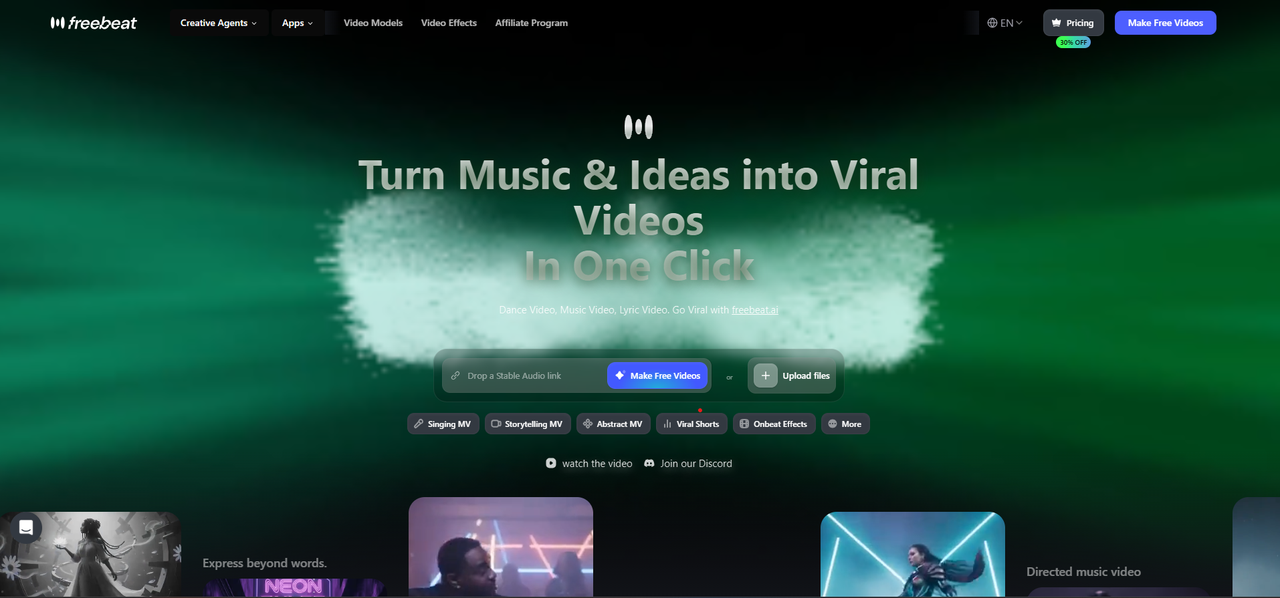
Why it is featured prominently: Freebeat is evaluated here as a music-first production system, not only as a short-clip generator. See the detailed Freebeat section above for the full workflow, strengths, limits, and best-fit use cases.
Best forA full music-video-first workflow
A full music video is the better choice when the release needs performance, character, narrative, or a visually memorable concept that can become campaign material.
How it fits the workflowStart with the song, define the visual world, then create enough scene variety to support the full track and social derivatives.
Watch forIt asks for more review, art direction, and generation than a lyric video or simple visualizer.
2Videobolt
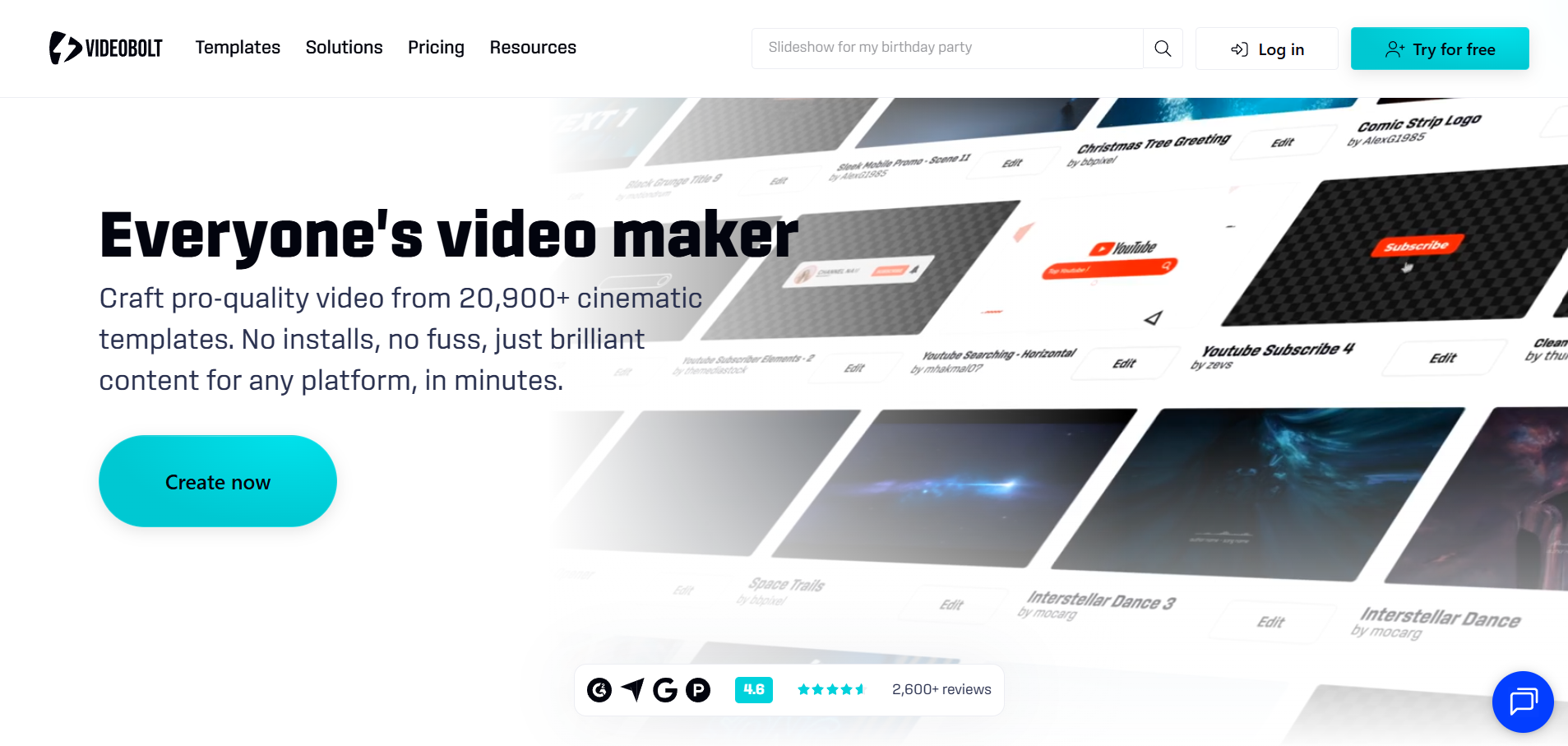
A lyric-video-first workflow
Lyric videos are effective when the audience needs to see the words clearly and the track benefits from kinetic typography or music-reactive text.
How it fits the workflowUse a dedicated lyric workflow to synchronize the official words, then customize type, background, and motion around the release identity.
Watch forThe format can feel promotional rather than cinematic if it becomes nothing more than subtitles over a background.
3Neural Frames
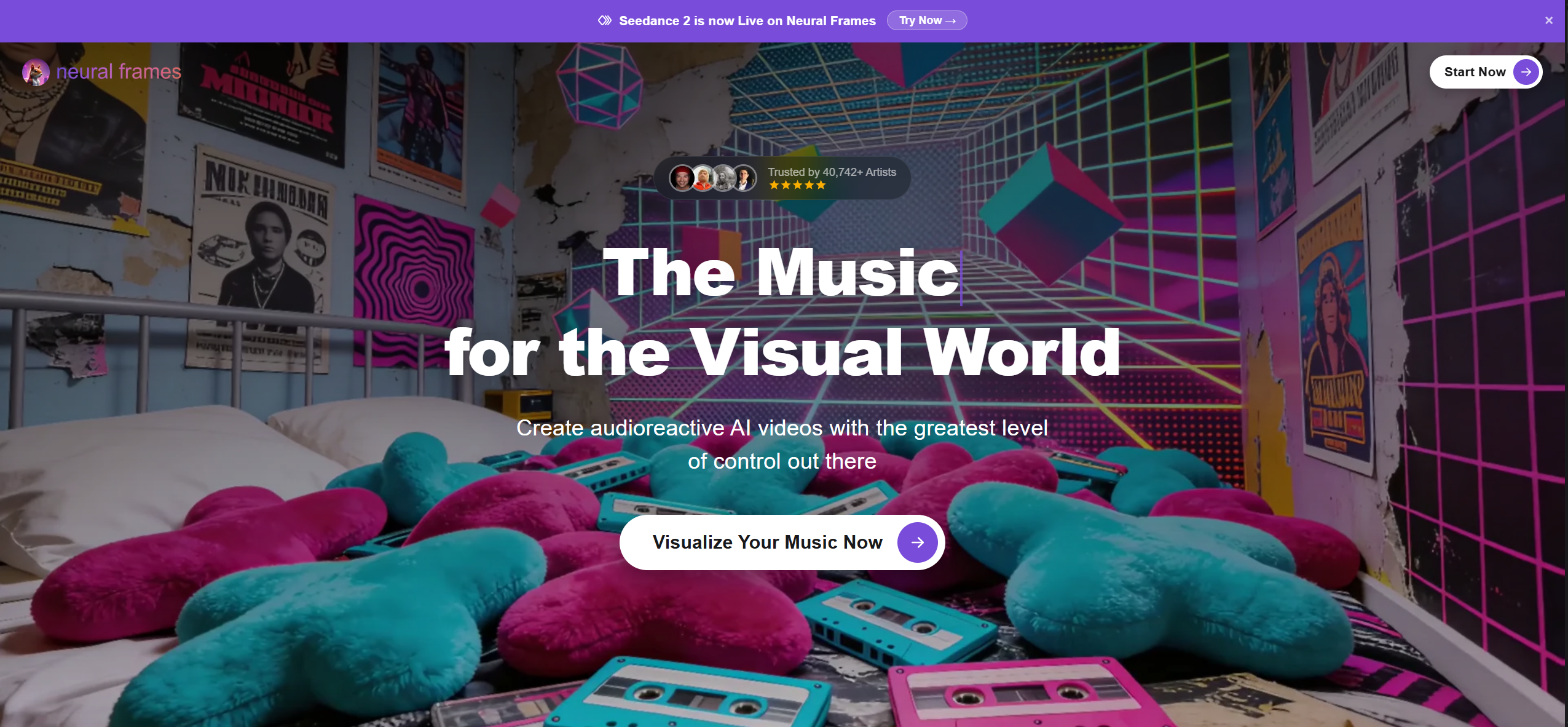
A visualizer-first workflow
Music visualizers are strong when the track itself should control motion and the artist needs a long-form asset without building a narrative around a performer.
How it fits the workflowUse audio analysis or stem-reactive motion to create an evolving visual world that follows the full song.
Watch forA visualizer usually gives fans less character or story information about the artist.
How to Choose the Right Option
Choose a lyric video when…
The lyrics are central to the release, the artist wants a fast YouTube asset, or fans are likely to search for the words. It is especially useful for new songs whose meaning deserves attention.
Choose a visualizer when…
The song needs a polished full-track presence but the campaign does not require a narrative. Visualizers are ideal for electronic music, ambient tracks, remixes, back-catalog releases, and YouTube uploads where a static cover would undersell the music.
Choose a full music video when…
The visual idea can become part of the artist brand. Performance, character, choreography, story, humor, surrealism, and cinematic spectacle all justify the extra work.
If your priority is turning one finished track into a coherent music video instead of generating isolated clips one at a time, try Freebeat’s song-to-video workflow →
Frequently Asked Questions
Which format is cheapest to produce?
A template-led lyric video or visualizer is usually the lightest production. A full AI music video needs more generation, review, and continuity work. Freebeat can support all three approaches, which makes it useful when the release plan includes more than one visual format.
Which format is best for YouTube?
All three can work. Use lyric videos for search and sing-along intent, visualizers for full-track listening, and full music videos for flagship releases.
Can I release all three for one song?
Yes. Staggering formats can extend the campaign without requiring a completely new visual identity each time.
Which format works best for Spotify?
Spotify Canvas is closer to a looping visualizer or animated artwork than a full music video. Build short loop-friendly assets from the same campaign world.
Do fans care whether a music video is AI-generated?
Fans tend to respond to the concept and execution. Use AI as a production method, but give the video a clear artistic point of view rather than showcasing the tool itself.


